#Tea Is Medicine
24008780_10159418448995411_1602419663_n.jpg

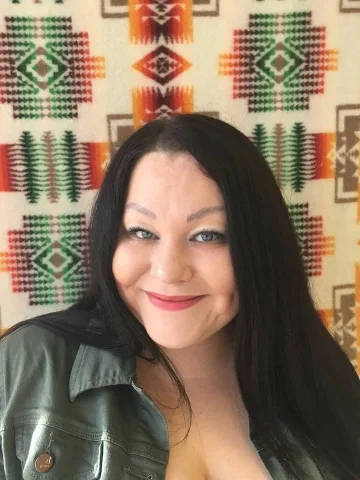
    It has been a full month since I launched the rebranded tea line, after a summer full of lumps, bumps, and ups and downs. Once again, I am totally blown away and humbled by the amazing support of the community. Not only have I personally felt so loved and supported during this time, but we are about to drop off our biggest donation yet to our community partner. I find myself sitting, as I write out a cheque for over $500 to Awo Taan, and I can’t help but feel completely blessed to know and engage with so many incredible souls. You will change the world mark my words.

What does it mean to stand in respectful solidarity within and with communities? What does it mean to be Indigenous? What does it mean to be an ally or accomplice? These are all questions I have and continue to grapple with. As a mixed race, Indo-Caribbean woman, my family has undoubtedly been affected by colonialism and ongoing racialization. Yet, my family has still be afforded privileges that other marginalized communities have not. .

            Sitting with my grandmother, we often talk about the need to stand in respectful solidarity with Indigenous and other marginalized communities. Our legacies are not the same, yet they are intersecting and multifaceted, thick with complicity and accomplicity. I believe we have to work together, and learn from each other, when we think about how to overcome our separate legacies of trauma.

            The first murder victim of the year, in New York City, was a young Indo-Caribbean woman. Her husband, in what has been deemed a murder-suicide, killed her. Domestic violence, and violence towards women, is a pervasive force within my own community – something that many are working hard to overcome. Similarly, I see gendered violence as a large and growing issue that seems to transcend borders, racially, geographically, and socioeconomically. So many communities, so many cultures, are shifting – fighting for healing, and beginning to create change. I believe that it is going to take us all to create the change we so desire.

            So, what are the ways that we can support each other? What are you already doing in community to build bridges of solidarity? I am continually inspired by the work of both the 4R’s Youth Movement on cross-cultural dialogue and The Alex Community Food Centre on food as a medium for health and healing. I have been exploring the idea of cross-cultural medicine. As some of you may have read, Sarjesa started out on the premise that every culture has tea and that it can be a powerful product that brings communities together and educates them about the local land and community. To me, it is the perfect combination of ingested goodness and digested knowledge.

            My challenge to you, as we move through the next cold months, is to share a cup of tea and conversation with someone else. They can be a neighbour, a friend, a loved one, or a complete stranger. Talk about the work and initiatives that are going really well, and talk about all that we can be doing better!

Best,

Alexandra

Solidaritea Story: Jonathan Nash
samantha-sophia-195012.jpg

What does it even mean to be in Solidarity?

I reflect on this question often. There doesn’t seem to be a simple answer. Perhaps the question shouldn’t even be answered—in full, anyways. Maybe it’s meant to hang in the background as a reminder that solidarity never means completion or perfection.

Solidarity is a project that requires a lot of work. As such it can be tiring for some people.

One is never completely in solidarity or finished being in solidarity. I think to be in solidarity itself means to be working towards community. I mean to say that if one i"s to be in Solidarity, then one is always working towards solidified community. It is never good enough to simply say you’re in solidarity because it is work.

The work of solidarity is not the same for every person. I am a white man, therefore need to put in the work—but my work is different. As a white man who works towards solidarity, I should relieve the work of those around me. I should never make them work more in the way white men often do. "Tell me how to be a better ally. Disclose to me all your experiences so I can be a better ally. What do you think of this hardship that makes me feel awful? How should I feel?"

Asking these questions may seem innocent or good-spirited—as an act of solidarity—but it adds to the work of those around me. I am making them work and not working myself. The way I should be working instead is to work on myself and to work on/with those in my community.

But more importantly, these questions demand the community works on me, to do the work for me. Something which is antithetical to the project of solidarity because it never is about me—especially me the white man.

Working is the hardest task of Solidarity because the work never ends.

Biographical Note:
I am a Graduate Student pondering the greatest mysteries of the literary canon. Was Kafka a philosopher by night and a story-teller by day? Who would triumph in an arm wrestling competition: Dostoyevsky or Freud? In the real world, I care for an indoor garden of orange trees and chase my beloved ferret-son, Rudy. I also read as much as possible. In conversation, I am known for missing critical consonants and forgetting vowels that make words work

Trout Taylor
Solidaritea Story: Holly Atjecoutay

My name is Holly Atjecoutay. I am a proud Cree and Saulteaux woman from Cowessess First Nation in Treaty 4 territory, but am honoured to call Treaty 7 my home. The most important roles I hold are: mother, wife, daughter, sister and friend. I graduated in 2015 with a Bachelor of Arts in English from Mount Royal University in Calgary Alberta. I have background working in the fields of: law, industry, community, economic development and business. My job is Indigenous Business Facilitator for a non-profit organization, where I assist Indigenous entrepreneurs pursue their dreams of owning businesses.

Holly Atjecoutay

Holly Atjecoutay

Solidariteas will always and forever hold a very special place in my heart because I was present from the very beginning, watching the amazing Alexandra brainstorm and ideate this wonderful and influential business was awe inspiring and nothing short of wonderful. Solidarity is defined as a synonym according to the English dictionary, but the word holds multitudes of significant meaning and power. Solidarity, as defined by myself, is a bridge between the Indigenous and non-Indigenous communities, and the major building blocks of that bridge are: Respect and understanding, unity, and courage.

It is extremely important that the non-Indigenous population understand and learn the history of Indigenous peoples. Know that the issues that plague our communities are deep rooted; they are the severe effects of intergenerational trauma, and yes, intergenerational trauma affects every Indigenous person in today’s society. Know that loss of language and culture, eradicated ways of being, erasure of identity, pride and self-worth were weapons fashioned by colonialism, but those weapons then manifested in such institutions as Residential Schools, Child and Family Services, prisons, health care, and religion. Know that those weapons created wounds and gashes in our families, communities, clans, and societies in the form of: alcoholism, drug use, lateral violence, abuse and corruption. I wish everyone could understand that the issue of Missing and Murdered Indigenous Women is not seeded in the issue of drug abuse, alcoholism and prostitution, rather the foundation of the issue is the lack of respect and honour Indigenous women experience in mainstream society. Indigenous women are viewed as disposable and unimportant in the majority of the western world. I wish North Americans could really study the statistics of MMIW and realize that many of them were “normal” women, working, studying, raising families, and often, were hitchhiking from their remote communities to the nearest urban center to buy food and basic necessities for their families, because in Indigenous communities, the women are the backbones and providers.

Understanding to the best of one’s ability is key. Not claiming to “know” Indigenous culture, but knowing about Indigenous culture. Indigenous individuals do not know everything about the vast and wide teachings of Indigenous epistemologies and ways of knowing; we are constantly learning from our elders, through stories, song, and language. Language is a form of reconciliation and reclamation for Indigenous peoples. Not every Indigenous person knows their language, and this is a heart wrenching reality. Understand that these histories are not solely regarding Indigenous peoples, but they are tethered to all Canadians, for this is Canada’s history.

The unity that is needed is for non-Indigenous peoples, whether fifth generation Canadians, newcomers, or refugees, and Indigenous peoples to form a strong relationship that fosters care, understanding, respect, empathy, and builds solutions to extremely apparent and well-hidden problems. Understanding the history and effects of colonialism and neo-colonialism, respecting culture and individuals plagued with a torrid history, and uniting as a forceful front against preconceived notions, prejudice, institutionalized racism and acts of violence will build courage: Courage to stand up and speak out against learned behaviour, acts of injustice, sympathetic racism and all forms of oppression and hatred.

Solidarity is needed now more than ever. We are not a society divided. All of the problems we each face as individuals and communities are no match to the solution of solidarity. We must all learn from each other, and understand that at the foundation of it all, we are all more alike than we are not. Ekosi.

Trout Taylor